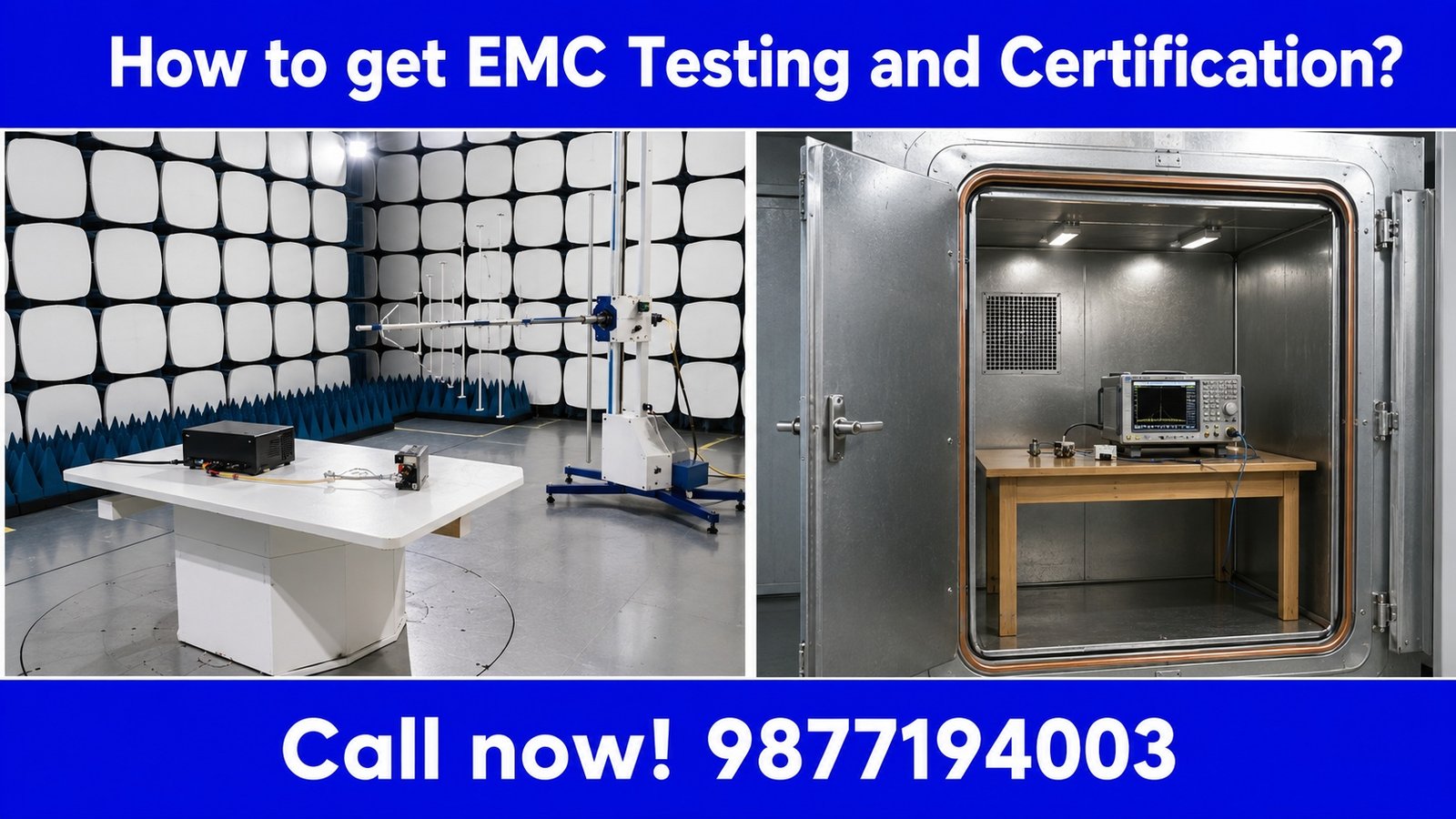
EMC Testing & Certification Services in India, the Middle East, and Europe
In today’s connected world, every electrical, electronic, telecom, industrial, automotive, medical, IoT, and wireless product must operate safely without interfering with other equipment. This is where EMC Testing and Certification become essential.
If your product creates electromagnetic noise, gets affected by nearby electrical signals, fails during operation, or does not meet regulatory requirements, it may face market rejection, product recalls, certification delays, import restrictions, or customer complaints.
QTC Groups helps manufacturers, importers, exporters, OEMs, startups, and product developers get reliable EMC Testing and Certification support across India, the Middle East, and European countries. From identifying applicable standards to testing coordination, documentation, and certification guidance, our team supports you through the complete compliance journey.
Whether you are launching a new product, exporting to Europe, entering the Indian market, supplying to government projects, or preparing for telecom/electrical compliance, QTC Groups can help you move faster and confidently.
Need EMC Testing or Certification Support?
Contact QTC Groups today by Call, WhatsApp, or Email for quick guidance.
What is EMC Testing?
EMC stands for Electromagnetic Compatibility. It means your product should work properly in its intended environment without causing unacceptable electromagnetic interference to other devices, and without being affected by electromagnetic disturbances from nearby equipment.
In simple words, EMC testing checks two major things:
-
Emission Testing – Whether your product is producing too much electromagnetic noise.
-
Immunity Testing – Whether your product can continue working correctly when exposed to electromagnetic interference.
For example, if a power supply, LED driver, medical device, machine controller, telecom device, or IoT product generates high interference, it may disturb nearby radios, communication equipment, sensors, control panels, or other electronic products. Similarly, if your product has weak immunity, it may restart, malfunction, freeze, give wrong output, or fail during actual use.
EMC testing helps ensure product reliability, safety, market acceptance, and regulatory compliance.
Why is EMC Testing Important?
EMC testing is not just a laboratory requirement. It directly affects your product quality, customer trust, and legal market access.
EMC testing is important because it helps you:
-
Meet national and international compliance requirements
-
Avoid product failure during real-world use
-
Reduce electromagnetic interference issues
-
Improve product quality and reliability
-
Support CE marking, NABL, BIS, TEC/MTCT, E, and other approvals
-
Avoid shipment delays, import problems, and certification rejection
-
Build customer confidence in your product
-
Enter India, the Middle East, and European markets smoothly
-
Reduce the risk of product recall or redesign after launch
For many electrical, electronic, telecom, and industrial products, EMC testing becomes a key part of product certification before sale, import, installation, or export.
Who Needs EMC Testing and Certification?
EMC testing is required or strongly recommended for a wide range of products, including:
-
Electrical and electronic products
-
Telecom and networking equipment
-
IoT devices and smart products
-
Industrial control equipment
-
Automation systems
-
LED lights and drivers
-
Power supplies and adapters
-
Household appliances
-
IT and audio/video equipment
-
Medical electrical equipment
-
Automotive electronic components
-
Wireless and RF-enabled devices
-
Measuring and laboratory instruments
-
Battery chargers and UPS systems
-
Solar inverters and power electronics
-
Control panels and machinery
-
Consumer electronics
-
Security and surveillance devices
-
Sensors, controllers, and embedded systems
If your product uses electricity, electronics, communication signals, switching power, motors, wireless modules or digital circuits, EMC testing may be required before market launch.
Types of EMC Tests
The exact test requirements depend on the product category, country, end use, and applicable standard. Common EMC tests include:
1. Radiated Emission Test
This test measures electromagnetic energy radiated from the product into the surrounding environment. High radiated emissions can interfere with radios, telecom systems, nearby electronics, or communication networks.
2. Conducted Emission Test
This test checks unwanted electrical noise that travels through power cables or signal cables. It is especially important for adapters, power supplies, chargers, LED drivers, appliances, and industrial equipment.
3. Electrostatic Discharge Test
This test checks whether the product can withstand static electricity discharge. For example, static shock from human touch can affect electronic circuits if the product is not properly designed.
4. Radiated Immunity Test
This test verifies whether the product can continue operating correctly when exposed to external electromagnetic fields from nearby transmitters, mobile phones, radios, or industrial equipment.
5. Conducted Immunity Test
This test checks the product’s ability to resist electromagnetic disturbances entering through power or signal cables.
6. Electrical Fast Transient / Burst Test
This test simulates fast-switching disturbances that can occur in electrical networks, relays, motors, and industrial environments.
7. Surge Immunity Test
This test checks product resistance against surge voltages caused by switching events, lightning effects, or power network disturbances.
8. Voltage Dips and Interruptions Test
This test checks whether the product can handle short voltage drops, interruptions, or fluctuations in the power supply.
9. Harmonics and Flicker Test
For certain products connected to public power supply networks, harmonics and flicker testing may be required to check the power quality impact.
EMC Certification for India
In India, EMC requirements may apply depending on product type, sector, and regulatory framework. For telecom equipment, NABL, TEC/MTCTE certification may include EMI/EMC requirements as part of the applicable Essential Requirements. For many electronic and IT products, BIS registration or other product-specific compliance may be required.
QTC Groups helps you identify whether your product needs:
-
EMC testing
-
BIS support
-
NABL, TEC/MTCTE support
-
Safety testing
-
RF testing
-
Product documentation
-
Test report review
-
Certification application support
-
Import/export compliance guidance
Since India has product-specific requirements, it is important to first check the exact category, technical specifications, and intended market use of the product.
EMC Certification for Europe
For European markets, EMC compliance is commonly linked with CE marking for electrical and electronic equipment. Products covered under EMC requirements must be designed and tested to ensure they do not create excessive electromagnetic disturbance and can operate properly in their intended electromagnetic environment.
Depending on the product, other European directives or regulations may also apply, such as:
-
Low Voltage Directive
-
Radio Equipment Directive
-
Machinery Regulation/Directive
-
RoHS requirements
-
Medical device requirements
-
Product safety requirements
QTC Groups supports manufacturers and exporters with EMC testing coordination, applicable standard identification, technical documentation guidance, and CE compliance support for European market access.
EMC Certification for Middle East Countries
Many Middle East markets require product compliance before import, sale, or installation. Requirements may differ from country to country and may include EMC, safety, telecom, radio, energy efficiency, or product registration requirements.
QTC Groups supports businesses looking to export or supply products across Middle East countries by helping identify relevant testing and certification pathways based on product type and destination country.
We assist with compliance planning for products entering markets such as the UAE, Saudi Arabia, Qatar, Oman, Kuwait, Bahrain, and other Middle East regions, depending on applicable product regulations.
How to Get EMC Testing and Certification?
Getting EMC testing and certification becomes easier when the process is handled step by step. At QTC Groups, we guide you from the beginning so that you avoid unnecessary delays, wrong testing, missing documents, and repeated failures.
Step 1: Share Product Details
The first step is to share basic product information with our team, such as:
-
Product name and model number
-
Product photos
-
Technical datasheet
-
User manual
-
Circuit details, if available
-
Power rating
-
Intended use
-
Target country or market
-
Existing test reports, if any
-
Certification requirement, if already known
Step 2: Identify Applicable Standards
Our team reviews your product category and target country requirements to identify the applicable EMC standards and certification route.
This step is very important because wrong standard selection can lead to failed certification, wasted testing costs, and delayed market launch.
Step 3: Pre-Compliance Guidance
Before final testing, we can guide you on common EMC failure points such as:
-
Poor grounding
-
Unshielded cables
-
Inadequate filtering
-
Weak enclosure design
-
PCB layout issues
-
Power supply noise
-
Cable routing problems
-
Missing ferrites or suppression components
-
Improper earthing or bonding
Early review can help reduce the risk of failure during final testing.
Step 4: EMC Testing Coordination
Once the applicable test plan is ready, the product is submitted for EMC testing through the appropriate laboratory/testing route. The tests may include emission, immunity, ESD, surge, EFT, conducted disturbance, radiated disturbance, and other applicable tests.
Step 5: Test Report Review
After testing, the EMC test report is reviewed to check whether the product meets applicable limits and requirements. If any failure occurs, our team helps you understand the issue and supports the next steps for corrective action.
Step 6: Documentation Preparation
Depending on the certification type, documents may include:
-
Product technical file
-
Test reports
-
User manual
-
Label details
-
Model list
-
Bill of material
-
Circuit diagram
-
Declaration of Conformity
-
Risk assessment
-
Factory details
-
Authorization documents
-
Importer/exporter details
-
Application forms
Step 7: Certification or Compliance Submission
After successful testing and documentation, the required certification or compliance process is completed based on the target market. This may include CE documentation, BIS/TEC support, product registration, approval coordination, or other country-specific compliance steps.
Step 8: Final Approval and Market Access
Once certification is completed, your product becomes ready for sale, import, export, supply or installation in the target market, subject to the applicable regulatory requirements.
Documents Required for EMC Testing and Certification
Document requirements depend on product category and country, but generally include:
-
Company details
-
Product details
-
Model number and variants
-
Product photos
-
Technical datasheet
-
User manual
-
Circuit diagram
-
PCB layout, if required
-
Bill of materials, if required
-
Critical component list
-
Power rating details
-
Label artwork
-
Existing test reports
-
Authorization letter
-
Factory details
-
Importer/exporter information
-
Target country details
Do not worry if you do not have all documents ready. QTC Groups can guide you step by step and help you understand what is required for your product.
Common Reasons Products Fail EMC Testing
Many products fail EMC testing, not because they are poor quality, but because the EMC design was not considered early. Common reasons include:
-
Inadequate shielding
-
Poor PCB layout
-
Noisy power supply
-
Weak grounding
-
Long unshielded cables
-
Improper cable routing
-
Missing filters
-
Poor enclosure bonding
-
High switching noise
-
Inadequate surge protection
-
Lack of EMI suppression components
-
Wrong adapter or power source selection
-
Incomplete product documentation
QTC Groups helps you identify likely issues early so that your product has a better chance of passing testing smoothly.
How Long Does EMC Testing and Certification Take?
The timeline depends on product type, test requirements, laboratory availability, documentation readiness, and whether the product passes testing in the first attempt.
A simple product may move faster, while complex telecom, industrial, medical, wireless, or multi-model products may take more time.
To avoid delay, it is best to start the EMC planning process before mass production or export shipment.
For an estimated timeline, contact QTC Groups with your product details.
Cost of EMC Testing and Certification
The cost of EMC testing and certification depends on several factors:
-
Product category
-
Applicable standards
-
Number of models
-
Number of tests required
-
Target country
-
Certification type
-
Testing laboratory route
-
Documentation requirements
-
Whether retesting is required
-
Whether product modification support is needed
Share your product details with QTC Groups to get proper guidance and cost estimation.
Why Choose QTC Groups for EMC Testing and Certification?
QTC Groups provides professional support for businesses that want smooth, reliable, and practical compliance guidance. We understand that certification can be confusing, especially when every country has different requirements.
With QTC Groups, you get:
-
End-to-end EMC testing and certification guidance
-
Support for India, the Middle East, and European countries
-
Product category and standard identification
-
Testing coordination support
-
Documentation assistance
-
Pre-compliance guidance
-
Technical report review
-
Support for manufacturers, importers, and exporters
-
Practical guidance to reduce delays
-
Fast response through Call, WhatsApp, and Email
-
Professional support from start to final certification
Our goal is simple: to help your product reach the market with confidence.
Industries We Support
QTC Groups supports EMC testing and certification for multiple industries, including:
-
Electronics manufacturing
-
Telecom and networking
-
IoT and smart devices
-
Industrial automation
-
Electrical equipment
-
Consumer electronics
-
Medical electrical products
-
Automotive electronics
-
Renewable energy products
-
LED and lighting products
-
Power electronics
-
IT equipment
-
Security and surveillance
-
Machinery and control systems
-
Laboratory and measuring equipment
Get EMC Testing and Certification Support Today
If you are planning to launch, import, export, or sell an electrical, electronic, telecom, IoT, industrial, or wireless product, do not wait until the last stage. Start your EMC compliance journey early and avoid costly delays.
QTC Groups provides trusted support for EMC Testing and Certification in India, the Middle East, and European countries.
Get EMC Certification Support! Contact us today for quick assistance.
WhatsApp EMC Expert: WhatsApp
Request EMC Testing Quote: QTCInd@Gmail.Com
Get expert guidance. Avoid certification delays. Launch your product with confidence.
EMC testing may be mandatory depending on the product category and target market. For many electrical, electronic, telecom and CE-marked products, EMC compliance is an important regulatory requirement.
EMI means Electromagnetic Interference. It refers to unwanted electromagnetic noise. EMC means Electromagnetic Compatibility. It means the product can operate properly without causing or suffering from unacceptable electromagnetic interference.
Yes. QTC Groups provides EMC testing and certification support for India, Middle East and European countries.
For many electrical and electronic products sold in Europe, EMC compliance is required as part of CE marking. The exact requirement depends on product type and applicable directives.
If your product fails, corrective actions may be needed. This can include filtering, shielding, grounding improvement, PCB changes, cable changes or component-level modifications. After correction, retesting may be required.
Yes. Pre-compliance testing or early EMC review is recommended before mass production. It helps reduce the risk of expensive redesign later.
Most electrical, electronic, telecom, industrial, medical, IoT, wireless, power supply, LED, control and automation products may need EMC testing depending on their market and use.